2026-11-03 · Robert Kline
Steps to Dry Out a Flooded Houston Home
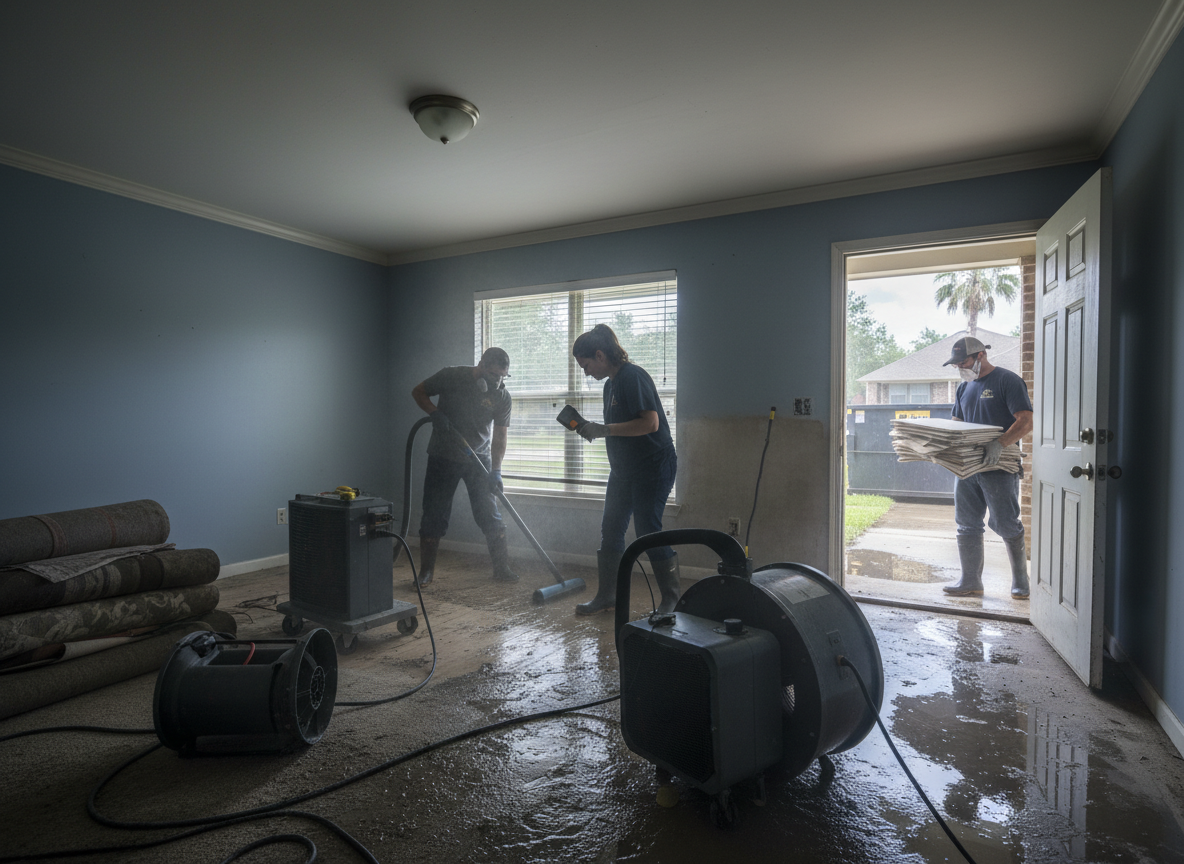
Drying a flooded home in Houston starts with safety checks and water removal, then moves to airflow and dehumidification that account for the region's high summer humidity and older construction common in the Heights and Montrose. The process varies by water volume and season, with mild winters offering faster natural drying than humid summers that affect homes across Harris County and nearby cities such as Katy, Sugar Land, and Pearland.
Assess Damage and Ensure Safety
Begin by turning off electricity at the main panel if water has reached outlets or appliances. Walk through the property wearing protective gear to note which materials are saturated, paying special attention to older plaster walls in Heights bungalows or slab foundations common in Midtown and River Oaks. Check attics and crawl spaces where hidden moisture can linger due to Houston's clay soils that retain water after heavy rains. Document every room with photos before moving furniture or belongings. This initial evaluation reveals whether drywall needs cutting or if hardwood floors in Downtown lofts can be saved through targeted drying. Homeowners in Montrose often find that 1960s construction hides moisture behind paneling, requiring more thorough inspection than newer builds in Pearland.
Remove Standing Water and Extract Moisture
Use a wet vac or submersible pump to clear visible water from floors and carpets within the first hours. Focus on low-lying areas such as garages and basements that collect runoff in Harris County flood events. Follow extraction by lifting rugs and removing soaked padding, then blot remaining dampness from upholstery and curtains. In homes near the Houston Zoo or Museum of Fine Arts, where older plumbing can fail during storms, repeat extraction passes help pull water from under cabinets and appliances. This step prevents water from wicking into adjacent drywall and reduces the load on later drying equipment. Properties in nearby Sugar Land and Katy with larger lots may need extra attention to exterior grading that directs water back toward foundations.
Increase Airflow and Control Humidity
Set up box fans and air movers to create cross-ventilation through open windows and doors once electricity is restored. Pair the fans with commercial dehumidifiers sized for the square footage, running them continuously in Houston's subtropical summers when outdoor humidity often exceeds indoor levels. Position units to pull moist air from wet walls and floors while exhausting drier air outside. In the Heights, where many homes have high ceilings, direct airflow upward to prevent moisture from settling in attics. Monitor humidity with a digital meter aiming for levels below 50 percent indoors. Residents in Pearland and League City report faster results when dehumidifiers run alongside fans during the cooler but still damp winter months.
Monitor Progress and Address Hidden Moisture
Check moisture meters on walls, floors, and framing every 12 hours to track drying progress. Cut small inspection holes in saturated drywall two feet above the floor in areas like Montrose and Midtown where water may have wicked upward. Remove baseboards to allow air behind walls and inspect insulation that holds water in older Heights properties. If readings stay elevated after several days, consider professional equipment for hard-to-reach spaces. Link to related guidance on Handling Water Damage After Houston Summer Storms for seasonal adjustments. Homes near Minute Maid Park or Space Center Houston sometimes require extra passes because of dense urban surroundings that limit natural airflow.
Prevent Mold and Finish Drying
Apply an antimicrobial solution to exposed wood and concrete once surfaces feel dry to the touch. Keep dehumidifiers running until all materials test at normal moisture content, which protects against mold growth encouraged by Houston's mild winters and persistent humidity. Replace any insulation or drywall that remains damp after extraction. For complex jobs involving multiple rooms, review Typical Costs for Water Damage Restoration in Houston to understand equipment and labor factors. Homeowners in River Oaks and Bellaire often schedule follow-up checks two weeks later to confirm no hidden pockets remain in slab foundations common to the area.