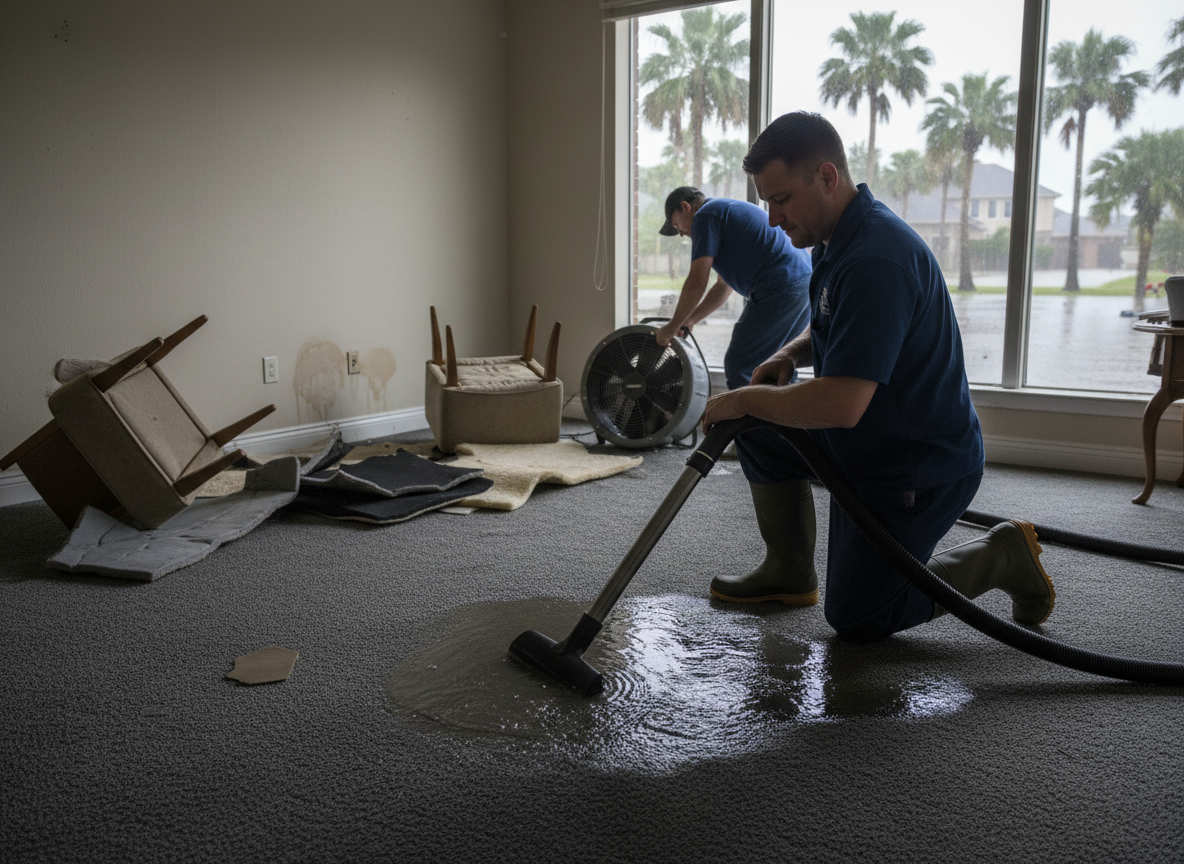
Houston's subtropical climate brings sudden downpours that overwhelm older slab homes in the Heights and Midtown. Water sits against foundations for days because clay soils in Harris County drain slowly. Technicians use truck-mounted extractors first, then air movers angled under cabinets to pull moisture from particleboard subfloors common in 1960s and 1970s builds.
In neighborhoods like River Oaks and Montrose, plaster walls and hardwood floors trap water behind baseboards. Leaving it leads to hidden mold within 48 hours when summer humidity stays above 70 percent. Crews cut weep holes at floor level and monitor with moisture meters before closing cavities, especially after appliance leaks or roof runoff near Downtown high-rises.
Nearby cities such as Katy, Sugar Land and Pearland see the same storm patterns. Extraction jobs there often involve larger volumes from street flooding that enters through garage doors. Teams stage dehumidifiers rated for 150 pints per day to counter the persistent moisture load that standard residential units cannot handle.
Technician insight
In Houston the thing that catches most people out with Emergency Water Removal is how quickly humidity re-soaks slab edges after extraction. Older homes in the Heights have perimeter leaks that look dry on top but stay wet underneath because the clay soil holds moisture for weeks after a storm.
Heights Home After Heavy Rain
Water entered a 1970s brick home through the garage door during a sudden downpour. Extraction crews found saturation under the laundry room vinyl that had wicked into the hallway subfloor. They removed standing water, placed drying equipment angled under cabinets, and returned daily until meter readings dropped below 15 percent.
Emergency Water Removal Services We Offer
✓Flood Water Extraction
Removes standing water from heavy rains that enter through doors and windows in Montrose and Midtown homes.
✓Burst Pipe Water Removal
Extracts water from supply line failures common in older Heights and River Oaks properties before it reaches subfloors.
✓Appliance Leak Extraction
Targets water from water heaters, washers and refrigerators that pools under cabinets in slab-on-grade Houston houses.
✓Storm Damage Water Removal
Clears rainwater that enters through compromised roofs or windows after tropical storms affecting Downtown and surrounding areas.
✓Sewage Water Extraction
Handles contaminated water backups from municipal lines that affect lower levels in Sugar Land and Pearland homes.
Emergency Water Removal Cost in Houston, TX
| Service | Typical Range | What Affects It |
|---|---|---|
| Initial emergency extraction visit | $250–$650 | Varies with water depth and square footage in single-story slabs. |
| Daily equipment rental after day one | $150–$350 | Higher in summer due to elevated humidity levels across Harris County. |
| Additional room drying setup | $100–$200 | Applies when water migrates into multiple areas like kitchens and hallways. |
Ranges are typical for Houston, TX and confirmed with an exact written quote before any work starts.
How it works
- 1
Arrival And Safety Check
Technicians arrive, locate the source and shut off utilities while protecting unaffected rooms with plastic barriers.
- 2
Standing Water Extraction
Truck-mounted pumps and wands remove bulk water from floors and carpets within the first hour on site.
- 3
Moisture Mapping
Infrared cameras and meters identify hidden saturation in walls, cabinets and subfloors throughout the structure.
- 4
Initial Drying Setup
Air movers and dehumidifiers are placed to begin evaporation before secondary mold growth starts in humid conditions.
Pricing
Cost depends on water volume, access difficulty and number of rooms affected.