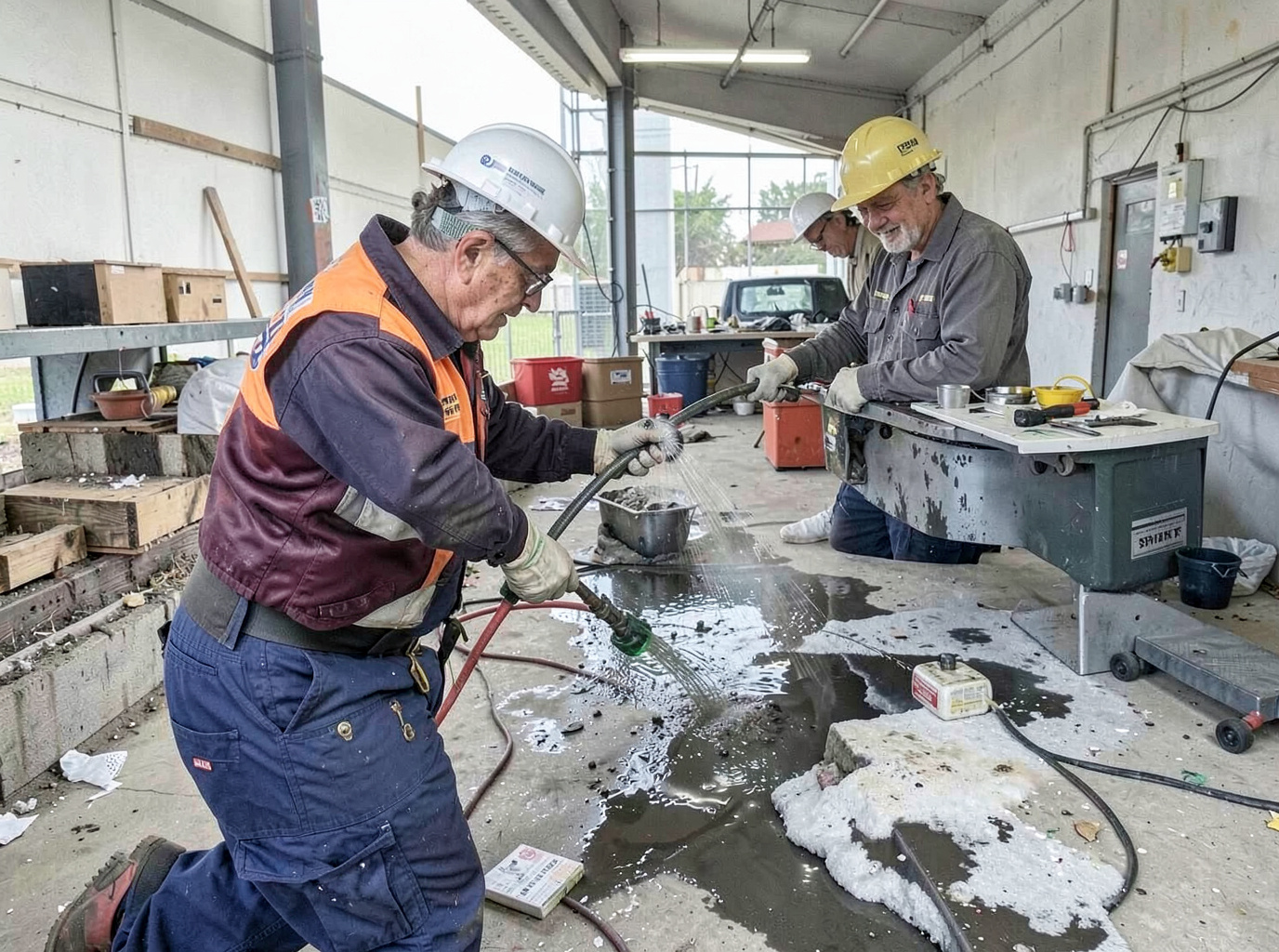
Houston’s subtropical climate keeps relative humidity high most of the year, so water that enters a structure rarely evaporates on its own. In neighborhoods such as the Heights and Montrose, many homes built before 1960 still contain plaster-over-lath walls and pier-and-beam foundations; once water reaches the crawl space it travels along joists and can reappear weeks later in finished rooms. Technicians must pull baseboards, drill weep holes, and run low-grain dehumidifiers for extended cycles rather than the shorter drying times common in drier climates.
River Oaks and Midtown properties often sit on clay soils that expand and contract with seasonal rain, creating hairline cracks in slab foundations. When a supply line bursts or a roof leaks during a summer storm, water follows those cracks and pools under tile or hardwood. Restoration crews use moisture meters at multiple depths and may need to remove sections of flooring to reach trapped water before mold colonies form in the humid air.
Downtown high-rises and nearby commercial buildings present different challenges: mechanical rooms, chilled-water lines, and shared walls mean one unit’s leak can affect several floors. Containment barriers and negative-air machines become necessary to keep moisture from migrating through HVAC returns while extraction and drying continue on the affected levels.
Technician insight
In Houston the thing that catches most people out with water damage restoration is how quickly moisture travels through the clay soils and under pier-and-beam homes in the Heights and Montrose; a small leak on one side of the house can show up days later on the opposite wall because the humidity never lets the wood dry on its own.
Heights Bungalow After Supply Line Leak
A kitchen supply line split overnight in a 1940s bungalow in the Heights. Water traveled under the hardwood into the living room and down into the crawl space. Extraction and targeted drying prevented mold in the joists; the homeowner was able to keep the original floors after three days of monitored drying.
Water Damage Restoration Services We Offer
✓Emergency Water Extraction
Rapid removal of standing water from kitchens, bathrooms, and crawl spaces using truck-mounted pumps sized for Houston’s frequent heavy downpours.
✓Structural Drying and Dehumidification
Placement of industrial air movers and low-grain dehumidifiers calibrated for Harris County humidity levels to prevent secondary damage in plaster and hardwood.
✓Mold Remediation After Water Damage
Containment and removal of mold growth that develops quickly in Houston’s warm, moist environment once water has soaked framing or insulation.
✓Hardwood Floor Restoration
Cupped or buckled flooring repair in older Heights and Montrose homes where pier-and-beam construction allows water to linger beneath boards.
✓Drywall and Insulation Replacement
Selective removal and reinstallation of saturated drywall and insulation in Midtown and Downtown units while protecting adjacent unaffected areas.
✓Crawl Space Water Cleanup
Pumping and drying of pier-and-beam foundations common throughout the Heights and River Oaks after storms or plumbing failures.
Water Damage Restoration Cost in Houston, TX
| Service | Typical Range | What Affects It |
|---|---|---|
| Emergency Extraction Visit | $450–$950 | Depends on volume of water and access to affected rooms in single-family homes. |
| Full Structural Drying | $1,200–$3,800 | Influenced by square footage, number of dehumidifiers needed, and duration in humid months. |
| Crawl Space Drying | $800–$2,400 | Higher when vapor barriers must be removed or piers require additional treatment. |
| Hardwood Floor Drying And Repair | $1,500–$4,200 | Varies with wood species, extent of cupping, and whether subfloor replacement is required. |
Ranges are typical for Houston, TX and confirmed with an exact written quote before any work starts.
How it works
- 1
On-Site Assessment
Technician inspects all affected rooms, measures moisture in walls, floors, and subflooring, and identifies hidden paths water may have traveled through Houston’s typical construction.
- 2
Water Removal
Standing water is extracted with pumps and wands; contents are moved or protected before drying equipment is positioned.
- 3
Drying And Monitoring
Air movers and dehumidifiers run continuously with daily moisture readings until materials reach acceptable dryness levels for the local climate.
- 4
Restoration And Repairs
Damaged drywall, flooring, and insulation are replaced; final walkthrough confirms no residual moisture remains in the structure.
Pricing
Pricing varies by extent of water spread, materials affected, and number of days required to reach dry standards in Houston humidity.