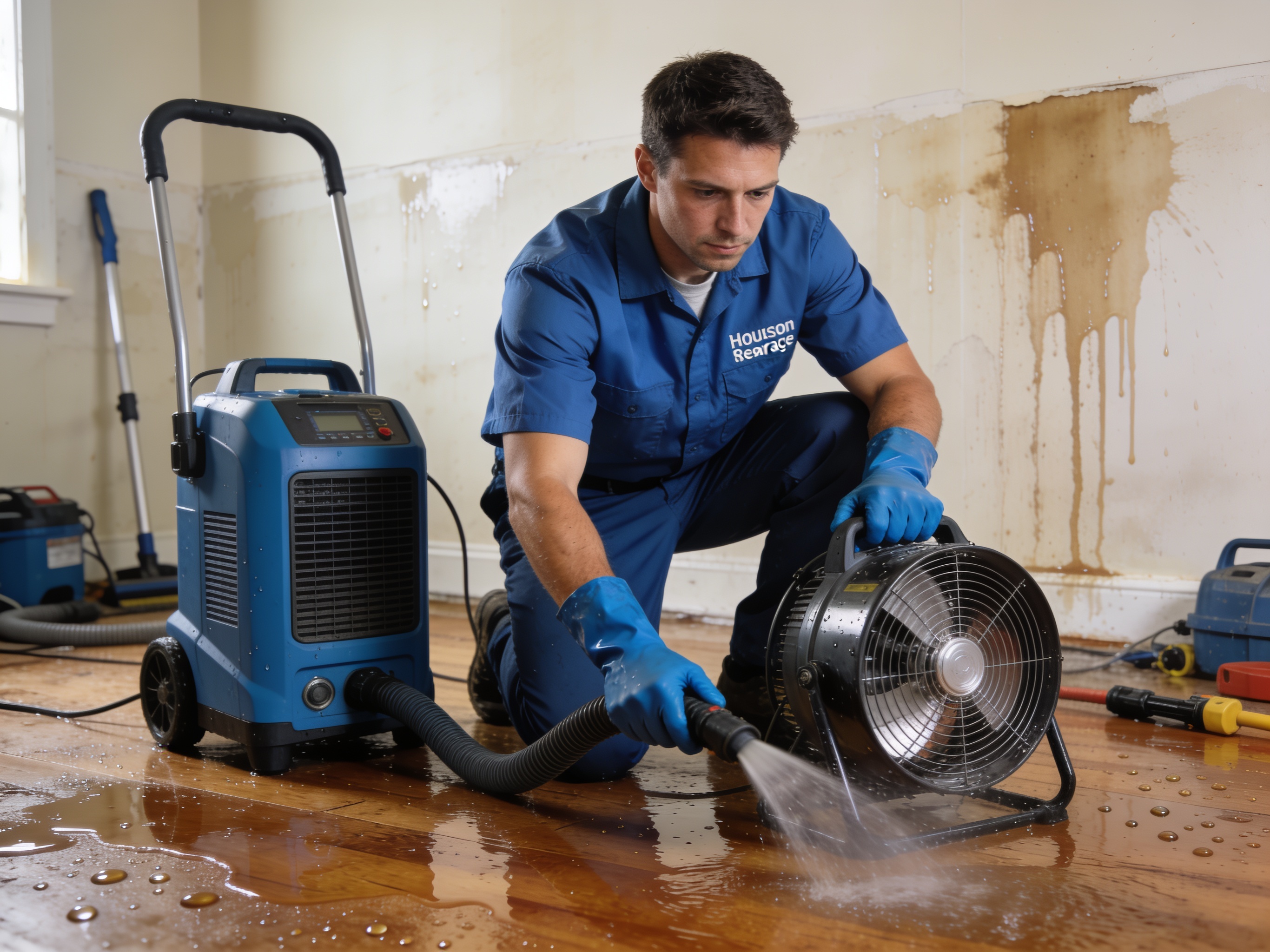
Houston's subtropical climate brings high humidity year-round that slows evaporation after leaks or storms, especially in single-story ranch homes common in the Heights and Midtown. Older plaster walls in River Oaks properties hold moisture longer than modern drywall, requiring moisture meters and targeted dehumidification to prevent hidden mold behind baseboards. Crews working near Downtown often deal with slab leaks that migrate under tile into adjacent rooms, demanding removal of affected flooring rather than surface drying alone.
Flooding from heavy rains frequently affects low-lying blocks in Montrose and near Minute Maid Park, where poor drainage and clay soil keep water pooled against foundations. In these cases technicians extract standing water first, then place air movers and dehumidifiers on a grid pattern to pull moisture from joists and subfloors. Homes in nearby Katy and Sugar Land face similar issues after hurricanes, so restoration plans always include checking HVAC ducts that can spread spores if left damp.
Harris County building practices from the 1960s through 1980s left many properties with particleboard cabinets and laminate that swell quickly when water reaches them. Restoration teams document every affected material before removal so homeowners can see why certain items cannot be saved. Final clearance testing confirms moisture levels match unaffected areas before any reconstruction begins.
Technician insight
In Houston the thing that catches most people out with water damage restoration is how the constant humidity keeps plaster and particleboard wet long after the visible water is gone, especially in 1960s Heights homes where moisture travels behind baseboards and into HVAC returns.
Heights Home After Heavy Rain
Water entered a 1970s Heights bungalow through a roof leak during a summer storm and soaked plaster walls in two bedrooms. Moisture readings showed migration into the attic insulation and HVAC ductwork. Crews extracted water, placed drying equipment for six days, and removed affected plaster sections before handing the home back dry and ready for repair.
Water Damage Restoration Service Services We Offer
✓Emergency Water Extraction
Rapid removal of standing water from homes in Montrose and Heights using truck-mounted pumps to limit further absorption into older flooring.
✓Structural Drying After Storms
Placement of industrial dehumidifiers and air movers to pull humidity from walls and ceilings in properties affected by subtropical rainfall.
✓Slab Leak Water Damage Repair
Detection and drying of moisture under concrete slabs common in Midtown and Downtown Houston homes before mold develops in adjacent rooms.
✓Basement and Crawlspace Restoration
Extraction and ventilation of water that collects under older River Oaks and Heights homes due to clay soil and poor grading.
✓Contents and Document Drying
Freeze-drying of books, photos, and textiles salvaged from flooded properties near the Houston Zoo or Museum District.
✓Post-Flood Flooring Removal
Safe removal of swollen hardwood and carpet in Pearland and Sugar Land homes followed by subfloor drying before new installation.
Water Damage Restoration Service Cost in Houston, TX
| Service | Typical Range | What Affects It |
|---|---|---|
| Emergency extraction visit | $350–$650 | Higher when multiple rooms or crawlspaces are involved |
| Full structural drying package | $1,200–$2,800 | Varies with home size and how long water sat before discovery |
| Slab leak drying and monitoring | $800–$1,600 | Includes daily checks until moisture readings stabilize |
| Contents drying service | $400–$900 | Based on quantity and type of items requiring freeze drying |
Ranges are typical for Houston, TX and confirmed with an exact written quote before any work starts.
How it works
- 1
On-Site Assessment
Technicians inspect all affected rooms, use moisture meters on walls and floors, and document water source and migration paths in Houston homes.
- 2
Water Extraction
Standing water is pumped out and absorbent materials are removed to stop further saturation of structural elements.
- 3
Drying and Dehumidification
Equipment is positioned based on home layout and local humidity levels to bring moisture content back to normal ranges.
- 4
Sanitization and Monitoring
Antimicrobial treatment is applied where needed and daily moisture readings continue until the structure is dry.
- 5
Final Clearance
Independent verification confirms all materials meet dry standards before any rebuilding work begins.
Pricing
Cost depends on water volume, affected square footage, and whether older materials like plaster or particleboard require extra handling.