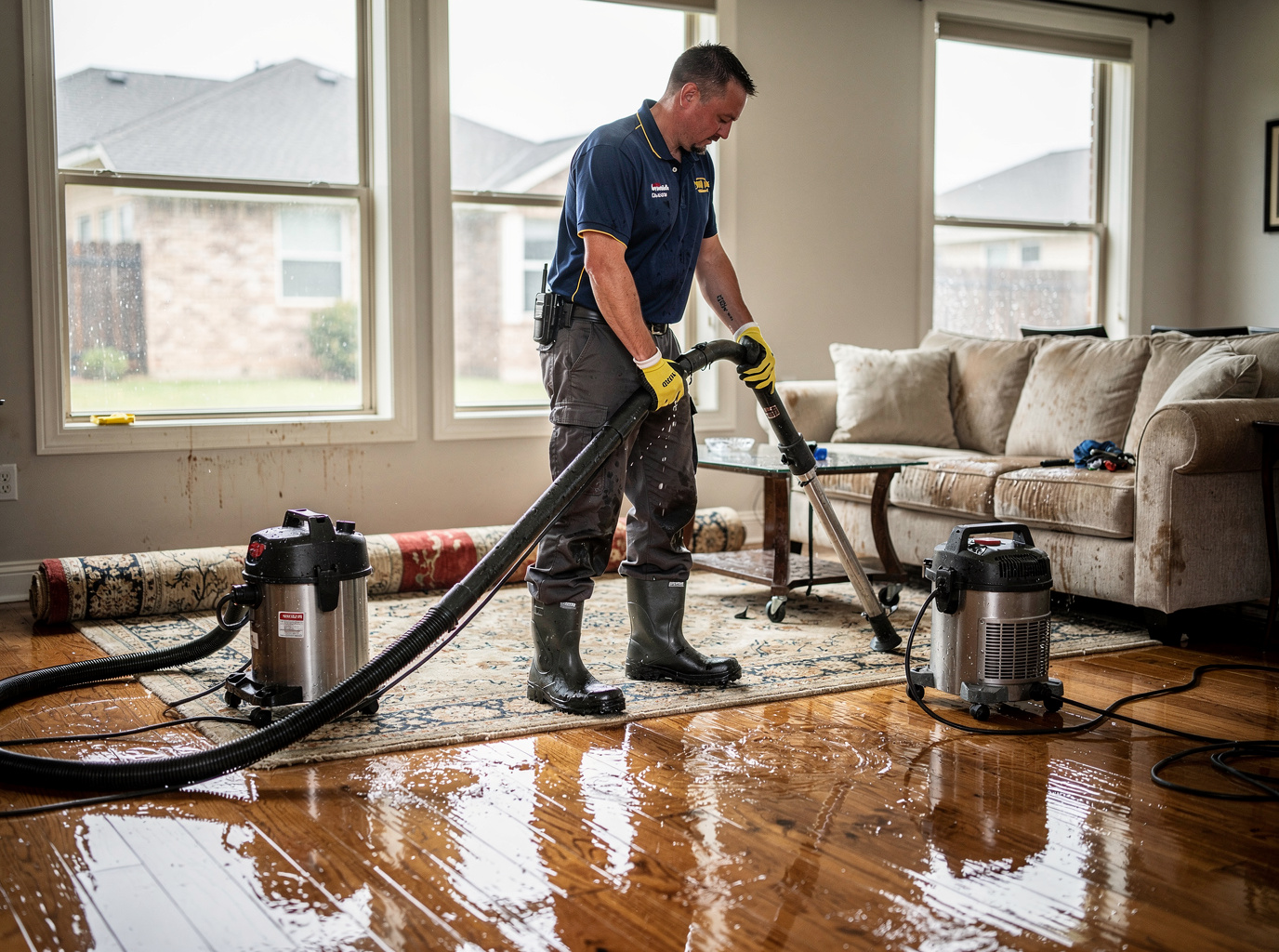
Galveston homes sit right on the Gulf with constant exposure to salt air and sudden storm surges that push water into crawl spaces and under pier-and-beam foundations common in the East End Historic District. Our crews reach properties via I-45 or the ferry in under an hour from the 77058 base, bringing extraction equipment sized for the high water tables found near Offatts Bayou.
Hot humid summers keep moisture levels elevated long after the rain stops, so drying historic plaster and heart-pine floors in Galveston requires slower, monitored dehumidification than inland jobs. We stage equipment on narrow lots along Broadway or 25th Street where access is tight and work around the island’s daily tourist traffic.
Mild winters do not stop northerly winds from driving rain under older roofs in the Silk Stocking District. When that happens we focus on hidden wall cavities typical of 1920s construction while keeping disruption low for residents who stay during repairs.
Around Galveston
We regularly work near:
- 📍Seawall Boulevard
- 📍Moody Gardens
- 📍Pleasure Pier
- 📍Rosenberg Library
- 📍Galveston Island State Park
- 📍61st Street Pier
Water Damage Restoration in Galveston — Local Notes
- •Galveston’s pier-and-beam homes on narrow island lots often trap water under the structure after high tides, requiring targeted extraction before mold sets in the humid air.
- •Saltwater intrusion from storm surges corrodes wiring and HVAC systems faster than freshwater leaks, so we test conductivity on every coastal job along Seawall Boulevard.
- •Historic districts limit heavy equipment access, so we use compact drying systems that fit through standard Victorian doorways on streets like 24th and Church.
- •Proximity to the Gulf means residual moisture lingers longer in summer; we run longer drying cycles on properties near Pleasure Pier to reach safe moisture readings.